What Are ICRS?
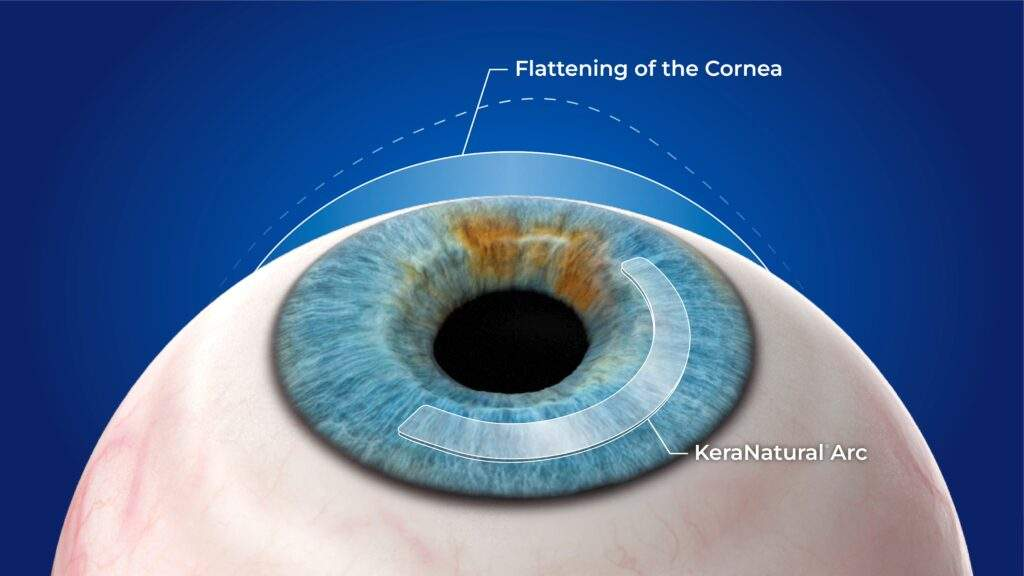
Intracorneal Ring Segments (ICRS) — also known as corneal rings or Keraring/Intacs — are small, arc-shaped polymer implants that are inserted into the mid-peripheral corneal stroma through a micro-incision or femtosecond-laser-created channel. By redistributing corneal tissue, they flatten the central cone shape characteristic of keratoconus, improving visual acuity and reducing irregular astigmatism.
The procedure is typically performed in combination with corneal cross linking (CXL) to both reshape and stabilise the cornea. ICRS are removable and exchangeable, making them one of the most flexible interventions available for keratoconus management before corneal transplantation is considered.
Key Benefits
Minimally Invasive
Performed under topical anaesthesia with femtosecond laser precision, with minimal disruption to the central cornea.
Reversible & Adjustable
Segments can be removed or exchanged if refraction changes, offering long-term flexibility.
Improved Visual Acuity
Reduces irregular astigmatism and corneal irregularity, often enabling patients to tolerate contact lenses or spectacles again.
Delays Transplantation
Can significantly delay or avoid the need for a corneal transplant by stabilising and improving corneal shape.
Who Is It Suitable For?
- Keratoconus (mild to moderate)
- Post-LASIK corneal ectasia
- Patients intolerant of rigid contact lenses
- Corneal irregularity with sufficient stromal thickness
- Patients seeking to delay corneal transplantation
The Procedure
Pre-operative Assessment
Detailed corneal topography and tomography maps are obtained to plan segment size, arc length, and placement depth with precision.
Femtosecond Laser Channel Creation
A femtosecond laser creates a precise stromal channel in the mid-peripheral cornea at the planned depth and arc.
Segment Implantation
One or two PMMA ring segments are inserted into the channel. The incision self-seals without sutures.
Recovery & Review
Vision improves over days to weeks. Follow-up mapping confirms the achieved reshaping and guides any further management.
Book a Consultation
Take the first step towards clearer vision. Our team at Dr. Moataz Eye Clinic will get back to you within 24 hours.
Book Now